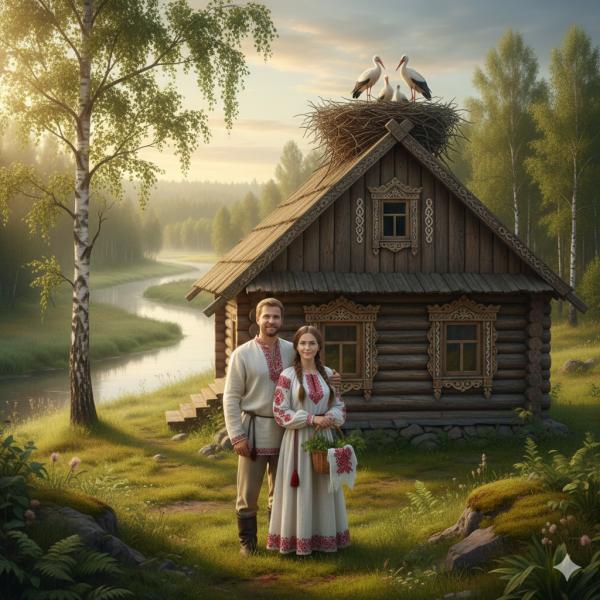
Belarus Love Love Story
.
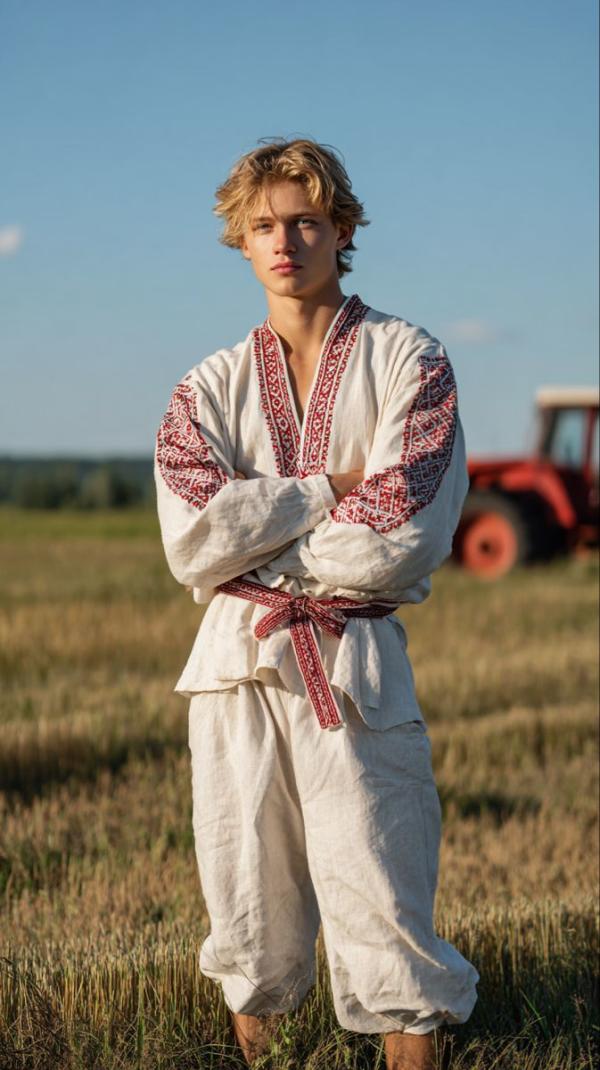
The village of Belaya Voshka did not appear on most modern maps, but to Kastus, it was the center of the universe. It was a place where the fog didn't just sit on the ground; it breathed. As a restorer of traditional wooden architecture, Kastus spent his days coaxing life back into the "dying" houses of the marshlands. He was a man of few words, with hands calloused by pine grain and eyes the color of the Pripyat River after a storm. He believed that if you listened closely enough to the wood, it would tell you the secrets of the people who lived behind it.
However, no piece of wood was as stubborn or as beautiful as Alesya.
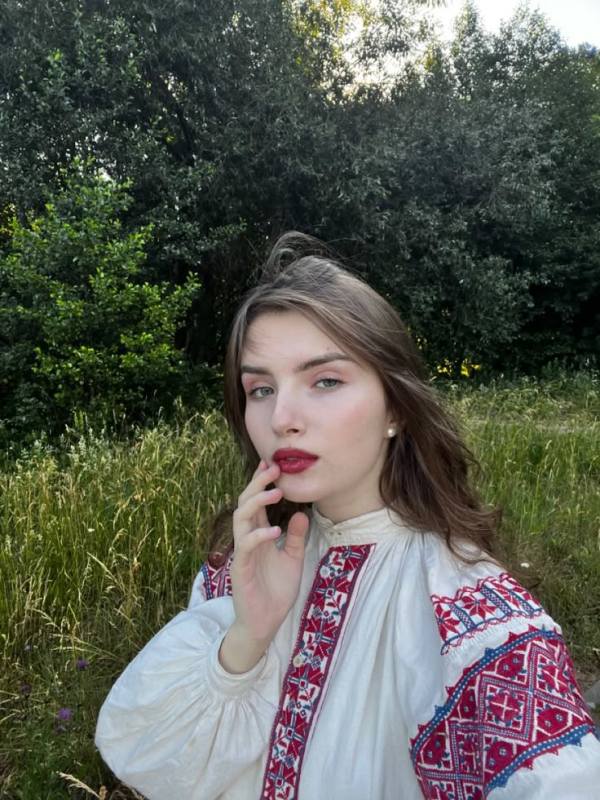
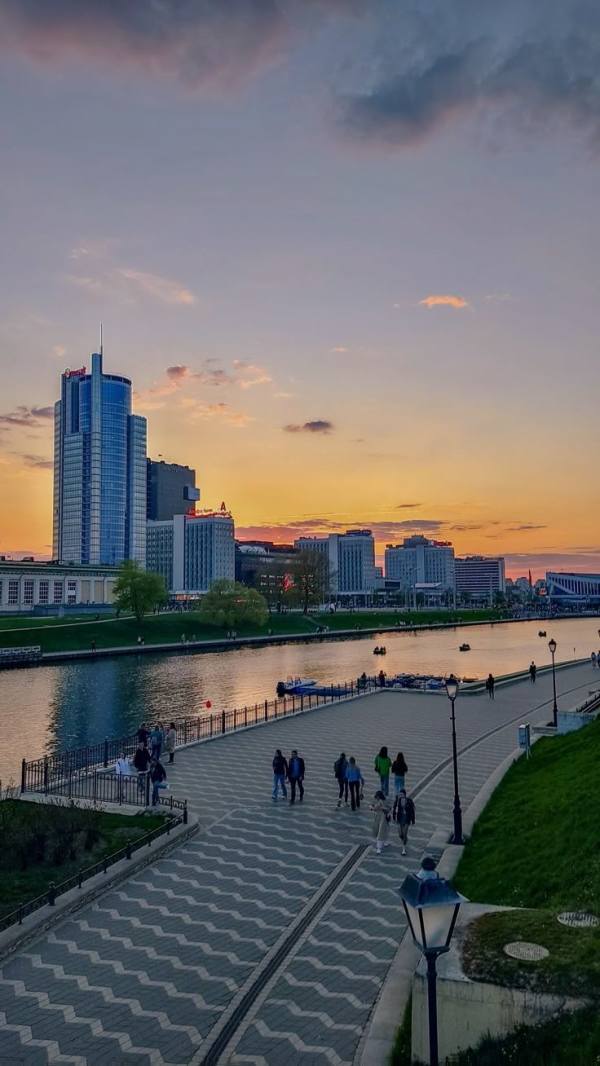
Alesya was the village’s unofficial keeper of stories. While the youth fled to the neon lights of Minsk, she stayed, tending to her grandmother’s garden and weaving traditional vyshyvanka textiles. She was the "girl of the forest," often seen wandering the edge of the silver birch groves with a basket of herbs. To Kastus, she was a living folk song—haunting, rhythmic, and just out of reach.
Their paths crossed properly on a Tuesday in late June, during the "Blue Hour"—that specific Belarusian twilight when the sky turns a deep, bruised violet. Kastus was working on the carved window frames (lishtvy) of the old community hall. He was perched on a ladder, his chisel moving with rhythmic precision, when Alesya appeared below him
alesya
You’re carving the solar symbols wrong," she said, her voice cutting through the evening hush
kastus
Kastus stopped, his mallet hovering in mid-air. He looked down. She was wearing a white linen shirt, the red embroidery at her collar glowing in the fading light. "The pattern is from the 1800s, Alesya. It’s for protection."
alesya
"It’s for protection against the wind," she countered, stepping closer so the scent of dried linden reached him. "But this house faces the marsh. You need the water-braid pattern. If you don't weave the river into the wood, the dampness will rot your hard work within three winters. My grandmother taught me the difference."
Kastus climbed down, his boots thudding softly on the mossy earth. He stood a head taller than her, smelling of sawdust and resin. He should have been annoyed—he was the expert, after all—but looking into her eyes, he saw a fierce devotion to their heritage that matched his own
kastus
Show me," he challenged, handing her his charcoal pencil.
Alesya didn't hesitate. She took the pencil, her fingers brushing against his—a brief, electric contact that made Kastus’s breath hitch. She leaned against the wood and drew a fluid, interlocking wave pattern. It was intricate and ancient. As she drew, she explained how the lines represented the flow of life, the way the marshes gave and took away.
For the next hour, the restoration project was forgotten. They sat on the porch steps as the first stars began to pierce the violet sky. They talked about the "dying" villages and the weight of being the ones who stayed behind
kastus
People call us 'tuteishyya'—the locals," Kastus remarked, looking out toward the dark silhouette of the forest. "Like we’re just part of the scenery. Like we don't have a choice."
alesya
We do have a choice," Alesya whispered. "Choosing to stay is an act of love, Kastus. It’s easy to love something new. It’s hard to love something that is crumbling
Kastus looked at her then, really looked at her. In the dim light, she looked like one of the spirits from the old legends. He realized that his work wasn't just about the wood anymore. He wanted to build something that would make her stay forever. He wanted to be the reason she didn't look toward the horizon.
alesya
As she stood up to leave, she handed him back the pencil. "The Kupala festival is in three days," she said softly. "The village will gather by the lake. Don't spend the whole night working, Kastus. Some things only bloom once a year."
He watched her disappear into the mist, her white dress flickering like a ghost between the birches. He looked back at the window frame. He didn't erase her drawing. Instead, he picked up his chisel and began to carve the water-braid into the heart of the timber.
.
The air in Belaya Voshka grew thick and sweet as the Summer Solstice approached. For Belarusians, Kupala Night was the thin veil between the physical world and the realm of spirits, a night where the earth whispered its deepest secrets. For Kastus, it was a deadline of a different sort. He had spent three days straight at the community hall, his chisel singing against the grain as he followed the lines Alesya had drawn. Every curve of the water-braid was a silent conversation with her.
By the time the sun began to dip on the eve of the festival, the village square was a riot of color and scent. Long wooden tables were dragged out under the heavy branches of ancient oaks, groaning under the weight of a feast meant to sustain the soul.
Alesya arrived carrying a heavy ceramic pot wrapped in a thick towel. When she saw Kastus leaning against the newly finished porch, she smiled—a rare, brilliant thing that made his heart hammer harder than any mallet.
alesya
You look like you haven't slept, Kastusyk," she said, using the soft version of his name for the first time
kastus
The wood doesn't sleep, so neither do I," he replied, straightening up.
alesya
She set the pot down and beckoned him over. "Eat. You cannot hunt for the Fern Flower on an empty stomach."
She uncovered the pot, and the steam hit him like a warm embrace. Inside were Draniki—golden, crispy potato pancakes, fried in lard until the edges were lace-like and perfect. Beside them sat a bowl of thick, cold sour cream and Machanka, a rich, hearty stew of smoked pork, sausages, and flour gravy.
Kastus took a bite of a pancake, the outside crunching before melting into the savory, grated potato center. It was the taste of home, of earth, and of survival. They ate together in a comfortable silence, sharing a plate as the village elders poured Krambambula—a potent honey and spice-infused vodka that warmed the blood. Around them, the village buzzed with the clatter of forks and the rhythmic "thud-thud" of women chopping herbs for the ritual wreaths.
kastus
Do you really believe in it?" Kastus asked, nodding toward the dark, looming wall of the forest. "The Paparats-kvetka? The Fern Flower that blooms at midnight?"
alesya
Alesya looked at her hands, stained slightly red from the berries she had been gathering. "I believe that people find what they are looking for. If you go into the woods looking for magic, you’ll see it in the way the moon hits the moss. If you go in looking for a reason to leave, you’ll find only shadows."
As darkness fell, the mood shifted. The "Big Fire" was lit near the lake—a towering bonfire that licked at the stars. Music erupted from an accordion and a fiddle, the melodies moving from melancholic drones to frantic, spinning polkas.
alesya
Jump with me," Alesya whispered, her hand finding his.
Jumping the fire was the test. If a couple held hands and cleared the flames without letting go, their love was destined to be eternal. Kastus looked at the fire, then at the girl who had become his compass. His hand closed firmly around hers, his calloused palm fitting perfectly against her soft one.
kastus
On three," he said.
They ran. The heat was a physical wall, the sparks dancing like orange fireflies around their faces. For a split second, they were suspended in the air, the roar of the fire beneath them and the vast Belarusian sky above. Kastus squeezed her hand so hard he could feel her pulse. They landed on the damp grass on the other side, stumbling into each other, breathless and laughing, their hands still locked tight.
The village cheered, but the sound felt miles away. Alesya’s hair had come loose from its braid, a wild halo in the firelight
alesya
The fire didn't burn us," she panted, her eyes searching his.
kastus
"The fire has nothing on you," Kastus replied, his voice gruff with a sudden, overwhelming realization. He didn't need to find a mythical flower to understand that the magic of the land wasn't in the plants—it was in the woman standing before him, the one who saw the river in the wood and the soul in the soil.
alesya
Come," she said, pulling him toward the water’s edge where the girls were launching their flower wreaths into the lake. "The night is half-over, and the forest is calling."
They slipped away from the music and the light, moving into the deep, silver-black silence of the trees. In the distance, the lake was dotted with tiny flickers of candlelight from the floating wreaths, but ahead of them lay the ancient, untamed heart of Belarus, where their story would either take root or vanish like the morning mist.
.
The deep woods of Belarus at midnight were not silent; they were a symphony of rustling leaves, the distant "hoo-hoo" of a long-eared owl, and the heavy, humid scent of damp moss and pine needles. Kastus and Alesya walked deep into the thicket, away from the dying embers of the village bonfire. Here, the silver birches looked like pale sentinels, and the ground was a soft carpet of peat that swallowed the sound of their footsteps.
According to the legends, the Paparats-kvetka would bloom for only a fleeting moment in the most inaccessible part of the forest. To find it was to understand all the world’s mysteries and to secure a love that would never wither.
alesya
"The elders say the flower glows with a light that isn't of this world," Alesya whispered, her voice barely a breath. She was still wearing the floral wreath on her head, though a few cornflowers had fallen, caught in the brambles.
kastus
Kastus kept his arm around her, shielding her from the low-hanging branches. "I used to think those stories were just to keep the children from wandering too far," he admitted. "But tonight, in this light, everything feels possible."
They reached a small clearing where the trees broke to reveal a hidden marshy pond, its surface as still as a black mirror. The air here was cooler, smelling of wild mint and cold water. They sat on a fallen log, an ancient oak that had likely seen centuries of Kupala nights.
kastus
If we don't find it," Kastus said, looking at the dark ferns crowding the water’s edge, "does it mean we aren't meant for that kind of luck?"
Alesya turned to him, her face illuminated by the pale, ethereal glow of the moon. She reached into her small linen pouch and pulled out a simple wooden ring. It wasn't gold or silver; it was carved from a dark, dense wood—oak, the symbol of strength.
alesya
"I found this in the workshop today, tucked behind the frame you were carving," she said softly.
kastus
Kastus felt a flush of heat rise to his face. He had spent his lunch breaks secretly working on that ring, sanding it until it was as smooth as silk. "It’s not a magic flower," he muttered, looking at his boots. "It’s just wood."
alesya
"It’s not just wood, Kastusyk," Alesya corrected him, her voice trembling with emotion. "You carved the water-braid into it. You listened to what the wood wanted to be. That is the magic. The Fern Flower isn't a plant you find in the dirt. It’s the moment you realize you don't need to look anywhere else."
She took his hand—the hand that was rough from labor and stained with the oils of the forest—and placed the ring in his palm.
Kastus looked at the ring, then at Alesya. The search for the mythical bloom suddenly felt unnecessary. The "luck" people hunted for in the shadows of the woods was sitting right next to him on a rotting log in the middle of a Belarusian marsh. He took the ring and slowly slipped it onto her finger. It fit perfectly, a circle of ancient oak connecting them to the land and to each other.
kastus
"I’m not going to Minsk," Kastus said firmly, the decision finally crystallizing in his heart. "And I’m not letting this village disappear. I’ll build us a house by the river, with storks on the roof and window frames that tell our story."
alesya
Alesya leaned her head on his shoulder, closing her eyes. "Then we’ve found it," she whispered. "The flower has already bloomed.
As the first grey light of dawn began to bleed through the canopy—the "White Morning" of the solstice—the forest seemed to exhale. The mists began to lift, revealing the vibrant green of the ferns, none of them glowing with fire, but all of them alive and resilient.
They walked back toward the village hand-in-hand, two tuteishyya—locals—belonging to the earth and to the morning. They didn't need the secrets of the universe; they had the smell of pine, the taste of salt on their skin, and a love that, like the Belarusian forest, was deep, ancient, and impossible to uproot.
The story of the woodcarver and the weaver was just beginning, written not in the stars, but in the grain of the oak and the thread of the linen.
Download NovelToon APP on App Store and Google Play